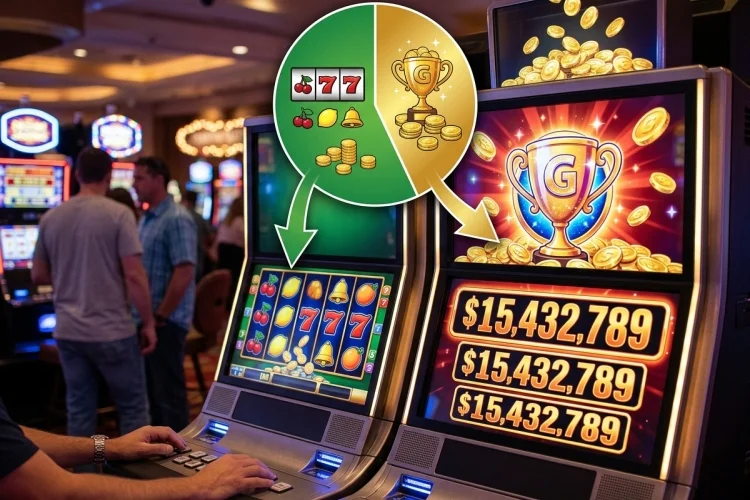

A jackpot is usually the largest prize available in a slot game, but not every jackpot follows the same structure.
Some have a stable value that remains unchanged, while others grow as qualifying wagers are placed across one or more connected games.
This comparison of Progressive Jackpots vs Fixed Jackpots explains the main differences in simple terms. We will look at prize values, funding methods, winning conditions, resets, and Return to Player percentages.
Neither format guarantees a win. A progressive prize may be much larger, but it can also depend on an extremely rare event. A fixed jackpot is easier to understand, although its maximum award is generally more limited.
What Is a Fixed Jackpot?
A fixed jackpot offers a predetermined top prize. Its value does not increase simply because more people play the game.
For example, a slot might pay 10,000 times the triggering stake for its highest symbol combination. With a qualifying $0.50 bet, the award would be:
10,000 × $0.50 = $5,000
The amount may still vary with the player’s stake. What remains fixed is the multiplier or prize structure stated in the paytable.
What Is a Progressive Jackpot?
A progressive jackpot begins with a starting amount, commonly called a seed, and can grow until someone wins it. Some of the qualifying wagering activity may contribute to the expanding prize pool.
Regulated jackpot rules should explain how the pool is funded, its seed value, any maximum ceiling, and what happens to additional contributions after the ceiling is reached.
After the jackpot is awarded, the displayed amount normally returns to its seed and begins increasing again.
How Different Progressive Networks Work
A standalone progressive is connected to one game or machine. A local system can link several games within the same platform or venue.
A multi-site or networked system combines eligible activity across a wider collection of participating games. GLI’s current progressive-jackpot standard distinguishes between standalone, linked, and multi-site implementations.
A larger network may make the prize grow faster because more qualifying activity contributes. This does not necessarily mean an individual player has a better chance of winning.
How Winning Conditions Differ
A fixed jackpot may require a particular symbol combination, such as five premium symbols on an active route. The payout is then calculated using the game’s fixed prize table.
Progressive prizes can also use symbol combinations, but some rely on bonus wheels, mystery events, or randomly selected jackpot triggers. The active rules should describe exactly how the prize is determined and awarded.
Previous spins do not make either type of jackpot due. Each qualifying round remains subject to the game’s programmed probability model.
Do All Stakes Qualify?
Fixed jackpots may scale with the wager, although some games require a particular betting level to unlock the maximum payout.
Progressive jackpots can have stricter eligibility conditions. A minimum stake, jackpot side bet, selected mode, or specific number of active lines may be required.
UK technical standards state that ineligible players should be clearly informed, along with the theoretical RTP applying when the progressive component is unavailable.
Always verify eligibility before assuming the headline amount can be won.
How RTP Can Be Displayed
A fixed-jackpot game generally includes the top prize within its overall theoretical RTP calculation.
For progressive games, the RTP can be displayed as one combined figure or separated into the base game and jackpot contribution. The base game may also need to be monitored independently from the progressive component.
RTP is an expected return across extended play. It does not guarantee that one player will recover a particular percentage during a short session.
Which Format Is More Volatile?
Progressive games are often highly volatile because part of their payout value can be concentrated in a very rare, extremely large prize.
Fixed jackpots may have a smaller maximum payout and a simpler distribution. However, a fixed-jackpot game can still be highly volatile if its largest ordinary wins are uncommon.
The jackpot type alone does not reveal the full risk. Players should also check volatility, regular symbol payouts, bonus frequency, and stake size.
Fixed jackpots offer a stable top prize based on a predetermined paytable. Progressive jackpots begin with a seed and can grow through qualifying activity until a winning event triggers the award.
Progressive systems may connect one game, a local group, or a multi-site network.
Neither format guarantees better short-term results. Before playing, confirm the trigger, required stake, prize calculation, RTP, and whether the jackpot resets or remains fixed.
Use the official rules rather than relying on the headline amount. Set a firm entertainment budget, and never increase spending simply because a progressive meter appears unusually large.