
What to Check Before Writing a Slot Review: A Practical Guide

Writing a useful slot review takes more than opening a demo, making a few spins, and describing the graphics.

A professional review should help readers understand how the game works, what information is available, and whether the overall experience is clear and technically reliable.

Knowing what to Check Before Writing a Slot Review also prevents common mistakes. A lucky bonus round can make an average game seem excellent, while a short losing session can create an unfairly negative impression.

Instead of judging the temporary balance, focus on verifiable details such as the rules, RTP, stake range, features, testing conditions, and interface quality.

Confirm the Exact Game Version

Start by recording the full title, software provider, release version, operator, and testing date. Some slots may appear on several websites with different stake ranges, feature options, or theoretical return settings.

Mention whether you tested a free demo or a real-money version. A demo is useful for examining mechanics and design, but it cannot test deposits, account verification, or withdrawals.

Also record the device, operating system, and browser. This context matters when discussing loading speed or technical problems.

Read the Paytable and Game Rules

Open the information menu before playing. Confirm the reel layout, number of paylines or winning ways, symbol values, wild behavior, scatter requirements, and bonus triggers.

British technical standards require game rules and information about the likelihood of winning to be available before a customer commits to gamble. This information may include RTP, house edge, or winning probabilities.

A review should explain these mechanics in simple language rather than copying promotional descriptions.

Verify RTP and Volatility Information

Return to Player, or RTP, describes the game’s theoretical long-term return. It is not a promise that a player will receive the displayed percentage during one session.

Actual RTP is calculated by dividing total winnings by total turnover over a measured period. Therefore, fifty or one hundred review spins cannot confirm whether a published percentage is accurate.

Check whether the provider identifies the game as low, medium, or high volatility. When no official volatility rating is available, avoid presenting your short experience as a mathematical fact.

Examine the Features Carefully

List the important mechanics, but do more than count them. Explain how free spins, multipliers, cascading reels, expanding wilds, or collection meters affect gameplay.

Ask whether the bonus rules are understandable and whether the feature adds something meaningful. A game with one clearly designed bonus can be more enjoyable than a complicated title filled with poorly explained systems.

Record how the feature was triggered rather than suggesting that it appears frequently based on one test.

Test the User Experience

Check loading time, menu navigation, button size, animation smoothness, sound controls, and text readability. Test both portrait and landscape mode when reviewing a mobile slot.

Describe technical issues specifically. For example, “The paytable text overlapped on a small Android screen” is more informative than saying the game is badly designed.

Repeat a test before reporting a serious problem. The issue could be caused by a temporary connection failure rather than the game itself.

Look for Testing and Licensing Signals

A reviewer cannot scientifically test an RNG by making ordinary spins. Independent laboratories use statistical and technical procedures to check whether random-number systems are unpredictable and free from inappropriate bias.

In Great Britain, new remote games must be adequately tested by an approved test house before release, with evidence supplied to the regulator.

Report the licence and testing information you can verify. Do not claim that personal play proves the game is fair.

Record Your Evidence

Take notes while testing instead of relying on memory. Save the published RTP, stake limits, paytable details, test duration, device information, and any technical problems.

Screenshots can help confirm interface details, although they should not expose personal account information. Keeping a repeatable worksheet also makes comparisons between games more consistent.

Separate confirmed facts from personal reactions. “The music repeats quickly” is an observation, while “the music is annoying” is an opinion.

Knowing what to Check Before Writing a Slot Review creates a stronger and more trustworthy article.

Confirm the exact version, study the paytable, verify published mathematical information, test important features, and document the device and conditions you used.

Do not score a game according to a short-term win or loss. Focus instead on transparency, usability, technical quality, and how clearly the mechanics are explained.

Before publishing your next review, create a simple testing sheet and complete it for every title. A consistent method will help readers compare games fairly and understand exactly how you reached your verdict.

Do You Need an App to Play Mobile Slots? A Beginner’s Guide

Mobile casino advertisements often encourage users to download an app before they start playing. That can make it seem as though installing software is the only way to access slot games on a phone.

In reality, you do not always Need an App to Play Mobile Slots. Many modern casino websites work directly through Safari, Chrome, Firefox, or another current mobile browser.

An official app may offer quicker access and a customized lobby, but browser play is often enough for free demos and real-money games where online gambling is legally permitted.

The better option depends on your phone, available storage, connection, and personal preferences.

Mobile Browsers Can Run Modern Slot Games

Current websites can adjust their layout according to screen size, resolution, and device type. This approach is called responsive web design, and it allows the same website to work across phones, tablets, and desktop computers.

To begin, open the verified casino website in your browser and visit its game lobby. Choose a mobile-compatible title, wait for it to load, and use the touchscreen controls just as you would inside an app.

No traditional software installation is necessary.

What Is a Mobile Slot App?

A slot app is a dedicated application installed on your phone. It may provide a customized game lobby, account settings, payment pages, saved preferences, and promotional notifications.

The app usually places an icon on your home screen, which makes returning to the platform faster. However, it also occupies permanent storage and may require regular updates.

A browser bookmark or home-screen shortcut can provide similarly quick access without installing a full native application.

When an App May Be More Convenient

An app may suit someone who regularly uses one licensed operator. Navigation can feel smoother because parts of the interface are already stored on the device.

Some apps may also support biometric login, account alerts, and stronger integration with phone settings. These features vary between operators, so check the app description rather than assuming every application offers them.

For occasional demo play, these advantages may not justify using additional storage.

When Browser Play Is the Better Choice

A browser is practical when you want to test several platforms or play only occasionally. You can open a website, try a free slot demo, and close the tab without maintaining another application.

Browser play is also helpful on phones with limited storage. Although websites may save cookies and cached files, they normally do not require the same permanent installation space as a full app.

Progressive web apps can create an experience that feels similar to a native application while still being built with standard web technology. Some can even be added to the home screen.

Are Apps Safer Than Browsers?

Neither format is automatically safer. A fake website can steal login details, while an unofficial app can request unnecessary permissions or contain harmful software.

Real-money casino apps on Apple devices must hold appropriate licences, operate only in approved locations, and be free to download. Google Play also requires permitted gambling apps to meet licensing, age, and geographic restrictions.

Always use the operator’s verified domain or official marketplace listing. Avoid installation files sent through pop-ups, text messages, or unfamiliar advertisements.

Do You Need an Account?

Many free demo slots can be opened without creating an account. Real-money gaming usually requires registration and may involve age, identity, and payment verification.

For example, British-licensed online operators must complete relevant age and identity checks before allowing customers to gamble.

Upload documents only through a secure account portal. Customer support should never ask for your password, card PIN, or one-time security code.

Test the Browser Version First

Before installing anything, open the mobile website and try a free demo. Check whether the game loads quickly, fits the screen, and provides readable controls.

Rotate your phone to landscape mode if the reels feel cramped. Closing heavy background apps and unused tabs may also improve performance.

Install the official app only when it provides a clear benefit, such as easier account management or noticeably smoother navigation.

You do not necessarily Need an App to Play Mobile Slots. A modern mobile browser can provide direct access to responsive slot games without a conventional software download, making it a simple choice for demos and occasional use.

An official app may be worthwhile when you regularly use the same legal platform and value quick access or app-specific features. Start by testing the browser version, compare its speed and controls, and review your phone’s available storage.

Whichever format you choose, verify the operator, follow local laws, protect your login details, and establish time and spending limits before playing.

Mobile Slots vs Desktop Slots: Which Is Better for Everyday Play?

Online slots can now run on almost any modern device. You can open a game on your phone while relaxing on the sofa or use a desktop computer for a larger, more detailed view of the reels.

The debate around Mobile Slots vs Desktop Slots is not simply about which device is more powerful. Mobile gaming offers portability and quick access, while desktop play provides more screen space and precise controls.

Game quality also depends on responsive design, connection speed, and the platform you choose. This guide compares the main differences to help you decide which setup fits your routine, preferences, and comfort level.

Mobile Slots Offer Greater Convenience

The biggest advantage of mobile slots is portability. A smartphone can access browser-based games almost anywhere with a suitable internet connection.

There is also no need to sit at a desk or start a separate computer. This makes mobile play convenient for short demo sessions or checking a game’s paytable while away from home.

Modern responsive design allows websites to reorganize their layout for different screen sizes and resolutions. Rather than displaying a tiny desktop page, a well-designed mobile lobby should resize menus, buttons, and game panels automatically.

Browser or Mobile App?

Mobile players can normally use a browser or an operator’s dedicated application. Browser access saves storage because no complete app needs to remain installed.

An app may offer faster navigation, saved preferences, and device notifications. However, real-money gaming apps should be downloaded only from verified sources and used where legally permitted.

Apple requires real-money casino apps to hold appropriate licences, restrict access to approved locations, and remain free to download. Google Play similarly permits gambling apps only in selected locations and under specific licensing conditions.

Desktop Slots Provide a Larger View

A desktop monitor gives reels, paytables, bonus information, and account menus more room. This can be useful when a game has a large grid, several meters, or detailed feature instructions.

Text is usually easier to read without zooming. A mouse also offers more precise control than tapping a small button on a phone screen.

Desktop play can therefore feel more comfortable during longer browsing sessions, especially when comparing several games or reading their rules before playing.

Controls Feel Different on Each Device

Mobile games rely mainly on touch controls. Tapping a spin button feels natural, but small icons can become frustrating when the interface is poorly optimized.

Desktop users normally navigate with a mouse, trackpad, or keyboard. MDN notes that mobile interfaces should make controls accessible for touchscreen users while desktop layouts should also accommodate mouse and keyboard interaction.

Neither control style is universally better. Touch is quick and direct, while a mouse provides accuracy.

Performance Depends on More Than Device Type

A powerful desktop may handle detailed animations more easily, but that does not mean every desktop experience will be smooth. Browser condition, available memory, connection quality, and the game’s optimization all matter.

Modern web technologies allow high-quality games to run directly inside browsers on both mobile and desktop systems. A newer phone may therefore outperform an old computer.

For mobile play, closing background apps can free memory. On a desktop, closing unnecessary browser tabs may reduce stuttering.

Game Results Should Not Depend on Screen Size

A larger monitor does not improve the probability of landing a winning combination. Similarly, using a phone does not make a game more or less generous.

In regulated random games, results must be acceptably random, and rules, payouts, and outcome probabilities cannot be changed while a game is available except as explained in its rules.

Device choice affects presentation and convenience-not the ability to predict random outcomes.

Mobile Play Can Be More Distracting

Phones are always nearby and regularly display messages, calls, and notifications. These interruptions may make it harder to notice how long a session has lasted.

Desktop play often takes place in a more deliberate setting, but time can still pass quickly. British remote-gambling standards require facilities that help customers track session duration through reality checks.

Regardless of device, set a time limit before opening a real-money game.

Which Platform Is Better?

Mobile is usually better for portability, quick access, and short sessions. Desktop is stronger for screen clarity, detailed game information, and precise navigation.

The best choice may also change throughout the day. You might explore a demo on your phone and later use a desktop to examine the full paytable.

The comparison between Mobile Slots vs Desktop Slots has no universal winner. Mobile devices provide flexible access and simple touch controls, while desktops offer larger displays, accurate navigation, and a more spacious interface.

Choose mobile when portability matters and desktop when you want to examine detailed rules or complex game layouts. Test the game in free mode on both devices when possible, and check whether it loads smoothly and remains readable.

Whichever platform you select, use verified services, understand the stake per spin, set firm limits, and remember that screen size does not change random game probabilities.

Can You Win Real Money from Free Slots? The Facts Explained

A free slot can display huge jackpots, exciting bonus rounds, and a balance filled with thousands of coins. Naturally, this creates an important question: can any of those winnings be turned into actual cash?

In most cases, you cannot Win Real Money from Free Slots when you are playing an ordinary demo.

The credits exist only inside the game and have no monetary value. However, promotional free spins, competitions, and certain prize-based platforms work differently.

Understanding the label attached to a game is essential because “free slot,” “demo mode,” and “free spins promotion” do not mean the same thing.

Standard Demo Slots Do Not Pay Cash

A demo slot is a simulation of a real-money game. It allows you to spin the reels without placing a financial stake.

The UK Gambling Commission describes most free-to-play slot games as versions involving no stake and no prize. The balance may rise after a winning combination, but those credits remain fictional.

For example, a virtual win of 100,000 coins may unlock animations or let you continue playing. It cannot normally be transferred to a bank account.

Why Demo Games Show Large Balances

Virtual balances make it easier to test different stake settings, paytable rules, and bonus features. A developer may provide 10,000 or 50,000 credits so players can explore the game for longer.

Those numbers are interface tools rather than financial assets. Even when the demo looks identical to a cash version, switching modes does not convert previous virtual winnings into money.

Regulated British demos offered alongside paid games must represent the corresponding game’s rules and prize distribution accurately, but the demo still does not award cash.

Promotional Free Spins Are Different

Online gambling operators sometimes offer free spins as account bonuses. These are not unlimited demo spins. They are promotional wagers placed on selected real-money games.

Winnings from promotional spins may become withdrawable, depending on the operator’s terms. Restrictions can cover eligible games, maximum stakes, expiry dates, withdrawal limits, or required account verification.

The Gambling Commission advises players to check whether they are using their own money or restricted bonus funds.

Wagering Requirements Can Affect Withdrawals

A promotion may require bonus winnings to be wagered before withdrawal. For example, a $10 bonus with a ten-times requirement could require $100 in qualifying wagers.

In Great Britain, bonus wagering requirements were capped at ten from January 19, 2026. Rules in other jurisdictions may be different, so the terms shown by the operator remain important.

Players must also be allowed to withdraw their original deposit and winnings generated from that deposit without completing wagering requirements attached to bonus funds.

What About Sweepstakes-Style Slot Games?

Some platforms use virtual currencies and prize-redemption systems instead of traditional casino deposits. A player may receive free currency through daily rewards, mail-in requests, or promotions.

These services are not the same as ordinary slot demos. Their availability, redemption rules, and legal status depend heavily on location.

Recent enforcement in New York, for example, targeted online sweepstakes casinos that authorities considered illegal gambling operations.

Always confirm whether a platform is permitted where you live.

Account Verification May Still Be Required

A legitimate operator may need to verify your identity, age, and payment information before allowing real-money gambling or processing certain withdrawals.

In Great Britain, online gambling businesses must verify age and identity before a customer gambles. They should not delay routine checks until withdrawal when the information could reasonably have been requested earlier.

A demo that does not require an account should never need your banking password or card PIN.

You generally cannot Win Real Money from Free Slots when “free slots” means ordinary demo games. Their coins and jackpots are virtual, regardless of how large the displayed balance becomes.

Real cash may be possible through legitimate promotional spins or legally available prize-based models, but these come with separate rules, eligibility conditions, and verification requirements.

Before playing, identify whether the game is a demo, cash promotion, or sweepstakes product. Read the withdrawal terms carefully, confirm that the operator is legal in your location, and never deposit money simply to recover or unlock a fictional demo balance.

How Free Demo Slots Work: A Simple Beginner’s Guide

Have you ever opened a slot demo, received thousands of virtual coins, and wondered what was happening behind the reels? Although no real money is involved, the game still uses rules, symbols, paylines, and random outcomes.

Understanding how Free Demo Slots Work can make the experience less confusing, especially if you are new to online slot games.

Demo mode is mainly designed to let users explore a title before deciding whether they enjoy its layout, theme, controls, and features. It can show you how the game behaves, but it cannot predict what will happen in future sessions.

What Is a Free Demo Slot?

A free demo slot is a practice version of an online slot game. Instead of using deposited funds, the game gives you a virtual balance that has no cash value.

You can normally spin the reels, open the paytable, adjust the virtual stake, and activate bonus rounds. However, any credits you collect remain inside the demo and cannot be withdrawn.

How Virtual Credits Replace Real Money

When demo mode begins, the game may provide 1,000, 10,000, or even more virtual coins. Each spin removes an amount from this balance, while winning combinations add credits back.

For example, starting with 5,000 credits and selecting a 20-credit stake would reduce the balance to 4,980 after a losing spin. A 100-credit prize would raise it to 5,080.

The numbers create a realistic-looking session, but they do not represent actual financial gains or losses.

How the Random Number Generator Works

Modern slot outcomes are commonly determined by a random number generator, or RNG. This system produces values that the game converts into reel positions and symbol combinations.

Regulated games are expected to produce outcomes that are unpredictable and distributed according to their mathematical probabilities. The UK Gambling Commission also prohibits adaptive behaviour that changes probabilities in response to a player’s recent results.

That means a previous loss does not automatically make the next spin more likely to win.

How the Reels Display the Result

The spinning animation creates excitement, but it does not usually determine the result. The outcome has already been selected by the game system, and the reels visually present it.

Each symbol combination is then checked against the game’s paytable. A win may depend on matching symbols across paylines, landing clusters, collecting scatter symbols, or forming combinations anywhere on the grid.

What Happens to Paylines and Bonus Features?

Demo slots normally include the same basic mechanics shown in the full game. These may include wild symbols, scatters, multipliers, expanding reels, cascading wins, and free-spin rounds.

For example, the official Gates of Olympus demo explains that four or more scatter symbols activate 15 free spins. It also uses tumbling reels and random multiplier symbols.

This allows players to understand a feature before encountering it in another version of the game.

What RTP Means in Demo Mode

Return to Player, usually shortened to RTP, is a theoretical percentage calculated across a very large number of game rounds. It is not a promise that one person will receive that percentage during a short session.

A fully random game may need hundreds of thousands or millions of rounds before its observed results begin moving closer to its theoretical RTP. Therefore, winning heavily during ten demo spins does not prove that the game is unusually generous.

Are Demo and Real-Money Outcomes Identical?

Rules vary by website and jurisdiction. In Great Britain, play-for-free games offered alongside real-money versions must use the same game rules and accurately represent the likelihood and distribution of prizes. Regulators also recommend using the same RNG or another unbiased system.

A provider-only promotional demo may be presented differently, so read any disclosure displayed around the game.

Learning how Free Demo Slots Work makes it easier to understand virtual balances, random outcomes, paylines, RTP, and bonus features. Demo mode is useful for exploring a slot’s design and controls without making a deposit.

Still, a short practice session cannot reveal what will happen later or guarantee similar results with real money. Use demos as entertainment and as a way to read the paytable carefully.

Open a trusted game library, compare several titles, and focus on learning how their mechanics differ rather than chasing a particular virtual balance.

What Is a Network Progressive Jackpot? A Simple Guide

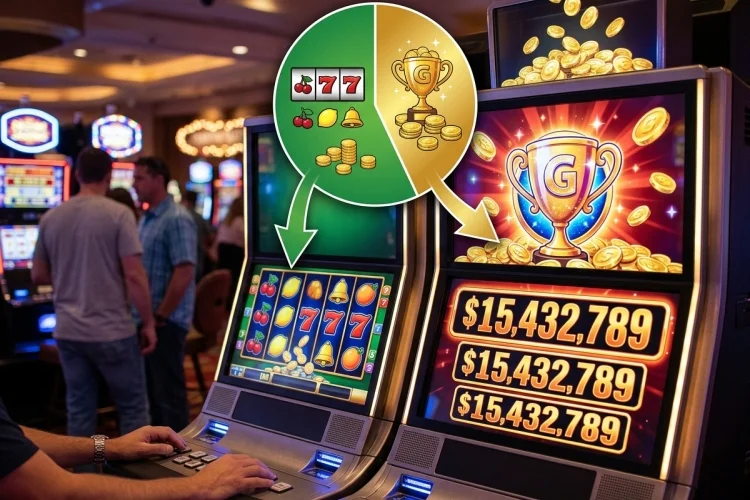
A jackpot can grow much faster when it is connected to more than one game. Instead of relying on wagers from a single slot, a shared system may collect qualifying contributions from games across several casino floors, websites, or participating venues.

This setup is commonly called a Network Progressive Jackpot. In technical standards, it may also be described as a linked or multi-site jackpot, depending on how widely the participating games are distributed.

The larger network can help the advertised prize rise quickly, but it does not guarantee that an individual player has better odds. Understanding how the pool, trigger, eligibility rules, and central controller work is essential before placing a wager.

How a Network Jackpot Is Defined

A progressive jackpot is a prize that increases from a starting value as qualifying gameplay contributes to it. A network version connects several participating games to one common prize.

Gaming Laboratories International distinguishes between three arrangements: standalone jackpots, linked jackpots, and multi-site jackpots. A multi-site system connects a linked prize across multiple gaming venues and may also include interactive gaming systems where permitted.

The term “network jackpot” is therefore a practical description rather than one universal regulatory category.

How the Prize Pool Grows

The jackpot begins with a seed or reset amount. As eligible wagers are placed, a predefined contribution is added to the prize pool.

Suppose a network collects 0.5% of qualifying turnover. If participating games process $2 million in eligible wagers, the pool would receive:

$2,000,000 × 0.5% = $10,000

This calculation is only an example. The actual increment method must be explained in the official rules. UK technical standards require disclosure of the funding method, starting seed, and any jackpot ceiling.

What the Central Controller Does

A network system needs technology to collect contributions, calculate the current prize, and communicate that value to every participating game.

Under GLI’s multi-site model, local controllers gather contributions from connected gaming equipment and send them to a central controller. The central controller increases the jackpot and distributes the updated amount back to participating locations and displays.

This process keeps the shared prize synchronised across the network.

How the Jackpot Is Triggered

A jackpot may be awarded through a specific symbol combination, a bonus game, or a mystery trigger selected by an approved random system.

The winning method should be described in the paytable or jackpot information page. Regulated game rules should explain what constitutes a win, whether wagers contribute to a progressive prize, and how that prize operates.

A growing meter does not show that the award is about to be triggered. The amount and the winning probability are separate parts of the game.

Does Every Wager Qualify?

Not necessarily. Some network jackpots require a minimum bet, an optional side wager, a particular number of active lines, or participation in a specific game mode.

The jackpot rules should clearly identify ineligible players and state the relevant theoretical RTP when the progressive prize cannot be won.

Always check the full cost of qualification. A higher stake may provide access to the jackpot, but it also makes the balance decline faster.

What Happens After a Win?

After a qualifying player wins, the jackpot normally returns to its published reset value. New eligible contributions then begin increasing the prize again.

The central system communicates the win and reset across participating locations. Technical standards also cover situations where network timing makes two triggers appear simultaneous, ensuring that the award process follows published rules.

A recently reset jackpot can theoretically be triggered again at any time.

RTP and Volatility

The game may show one combined RTP covering the base slot and progressive component, or separate percentages for each.

Network jackpots are generally rare and potentially very large, which makes them highly volatile. The UK Gambling Commission recommends monitoring the base game separately because occasional jackpot wins can heavily distort performance data.

RTP remains a long-term theoretical measurement rather than a promise for one session.

A Network Progressive Jackpot connects multiple eligible games to one growing prize. Contributions are gathered by local systems, combined through a central controller, and displayed across the participating network.

The prize continues increasing until the published winning event occurs, after which it normally resets to a seed value. Before playing, check the qualifying stake, trigger method, jackpot contribution, RTP, and current prize rules.

Do not assume that a larger network or growing meter makes a win more likely. Use only an affordable entertainment budget, monitor the total amount wagered, and stop when your predetermined money or time limit is reached.

Progressive Jackpots vs Fixed Jackpots: Key Differences

A jackpot is usually the largest prize available in a slot game, but not every jackpot follows the same structure.

Some have a stable value that remains unchanged, while others grow as qualifying wagers are placed across one or more connected games.

This comparison of Progressive Jackpots vs Fixed Jackpots explains the main differences in simple terms. We will look at prize values, funding methods, winning conditions, resets, and Return to Player percentages.

Neither format guarantees a win. A progressive prize may be much larger, but it can also depend on an extremely rare event. A fixed jackpot is easier to understand, although its maximum award is generally more limited.

What Is a Fixed Jackpot?

A fixed jackpot offers a predetermined top prize. Its value does not increase simply because more people play the game.

For example, a slot might pay 10,000 times the triggering stake for its highest symbol combination. With a qualifying $0.50 bet, the award would be:

10,000 × $0.50 = $5,000

The amount may still vary with the player’s stake. What remains fixed is the multiplier or prize structure stated in the paytable.

What Is a Progressive Jackpot?

A progressive jackpot begins with a starting amount, commonly called a seed, and can grow until someone wins it. Some of the qualifying wagering activity may contribute to the expanding prize pool.

Regulated jackpot rules should explain how the pool is funded, its seed value, any maximum ceiling, and what happens to additional contributions after the ceiling is reached.

After the jackpot is awarded, the displayed amount normally returns to its seed and begins increasing again.

How Different Progressive Networks Work

A standalone progressive is connected to one game or machine. A local system can link several games within the same platform or venue.

A multi-site or networked system combines eligible activity across a wider collection of participating games. GLI’s current progressive-jackpot standard distinguishes between standalone, linked, and multi-site implementations.

A larger network may make the prize grow faster because more qualifying activity contributes. This does not necessarily mean an individual player has a better chance of winning.

How Winning Conditions Differ

A fixed jackpot may require a particular symbol combination, such as five premium symbols on an active route. The payout is then calculated using the game’s fixed prize table.

Progressive prizes can also use symbol combinations, but some rely on bonus wheels, mystery events, or randomly selected jackpot triggers. The active rules should describe exactly how the prize is determined and awarded.

Previous spins do not make either type of jackpot due. Each qualifying round remains subject to the game’s programmed probability model.

Do All Stakes Qualify?

Fixed jackpots may scale with the wager, although some games require a particular betting level to unlock the maximum payout.

Progressive jackpots can have stricter eligibility conditions. A minimum stake, jackpot side bet, selected mode, or specific number of active lines may be required.

UK technical standards state that ineligible players should be clearly informed, along with the theoretical RTP applying when the progressive component is unavailable.

Always verify eligibility before assuming the headline amount can be won.

How RTP Can Be Displayed

A fixed-jackpot game generally includes the top prize within its overall theoretical RTP calculation.

For progressive games, the RTP can be displayed as one combined figure or separated into the base game and jackpot contribution. The base game may also need to be monitored independently from the progressive component.

RTP is an expected return across extended play. It does not guarantee that one player will recover a particular percentage during a short session.

Which Format Is More Volatile?

Progressive games are often highly volatile because part of their payout value can be concentrated in a very rare, extremely large prize.

Fixed jackpots may have a smaller maximum payout and a simpler distribution. However, a fixed-jackpot game can still be highly volatile if its largest ordinary wins are uncommon.

The jackpot type alone does not reveal the full risk. Players should also check volatility, regular symbol payouts, bonus frequency, and stake size.

Fixed jackpots offer a stable top prize based on a predetermined paytable. Progressive jackpots begin with a seed and can grow through qualifying activity until a winning event triggers the award.

Progressive systems may connect one game, a local group, or a multi-site network.

Neither format guarantees better short-term results. Before playing, confirm the trigger, required stake, prize calculation, RTP, and whether the jackpot resets or remains fixed.

Use the official rules rather than relying on the headline amount. Set a firm entertainment budget, and never increase spending simply because a progressive meter appears unusually large.

Megaways Slots vs Traditional Payline Slots: Key Differences

Online slots may share the same basic spin button, but their winning systems can work very differently. Traditional slots usually rely on a fixed grid and a set number of paylines.

Megaways games replace that predictable structure with changing reel heights and a variable number of winning routes. This comparison of Megaways Slots vs Traditional Payline Slots explains what happens behind both formats.

We will look at reel layouts, paylines, ways to win, cascading symbols, betting controls, and bonus features. Neither format guarantees better results.

The main difference is how each game organises its symbols and evaluates winning combinations. Understanding that distinction makes it easier to read the paytable and recognise what is happening after every spin.

Traditional Slots Use a Fixed Reel Grid

A traditional video slot commonly uses five reels and three rows. That creates 15 visible symbol positions, and the grid normally stays the same throughout the base game.

The number of paylines is also fixed or selected before spinning. Examples range from simple nine-line games to titles offering 20, 40, or 45 patterns. Evolution describes Gonzo’s Quest as a five-reel, three-row game with 20 paylines, while Superstars uses 45 lines.

A winning combination must usually land on one of the eligible line patterns shown in the paytable.

Megaways Reels Change Height

Megaways is a dynamic game mechanic created by Big Time Gaming. A standard version typically uses six reels, with each reel displaying between two and seven symbols.

Because the heights are selected for each spin, the visible grid can expand or shrink. Big Time Gaming says the mechanic can offer up to 117,649 ways to win, replacing the fixed-payline model with a more dynamic structure.

A taller grid creates more possible symbol routes, but it does not automatically create a payout.

Paylines Follow Predetermined Patterns

In a traditional slot, a payline connects specific positions across the reels. It might run straight through the middle row, move diagonally, or follow a zigzag route.

Suppose a game has 20 active paylines. A group of identical symbols must appear on one of those 20 patterns and satisfy the paytable’s direction rules.

Some traditional titles allow wins from left to right only. Others, such as Starburst, can evaluate combinations in both directions.

Players should therefore check both the number of lines and the direction in which they pay.

Megaways Uses Adjacent-Reel Combinations

Megaways games generally do not require symbols to follow a drawn line. Matching icons can occupy any suitable position as long as they appear across consecutive reels, usually beginning on the left.

Imagine a symbol appearing twice on reel one, three times on reel two, and twice on reel three. If three adjacent reels are enough to win, the result creates:

2 × 3 × 2 = 12 winning ways

The game automatically evaluates every eligible route. Players do not need to activate individual Megaways combinations.

Why the Number of Ways Changes

The available ways are calculated by multiplying the visible symbol positions on each reel.

A layout showing three, four, five, three, six, and four symbols provides:

3 × 4 × 5 × 3 × 6 × 4 = 4,320 ways

When all six reels display seven positions, the total reaches:

7 × 7 × 7 × 7 × 7 × 7 = 117,649 ways

That maximum is advertised by official Big Time Gaming titles such as Pirate Pays and Max Megaways.

Cascades Are More Common in Megaways

Many Megaways titles use cascading symbols. After a winning combination is paid, the participating icons disappear and new symbols enter the grid.

The updated result is then evaluated again without a separate stake. The process can continue until no fresh win appears.

Bonanza combines its Megaways system with Dual Reactions, which replace symbols from both vertical and horizontal directions. Traditional slots can also include cascades, but they are not an automatic feature of fixed paylines.

Does Either Format Offer Better Odds?

Neither format is automatically better. Megaways describes the reel and winning-route system, while paylines describe predetermined patterns.

The game’s RTP, volatility, symbol distribution, stake, and paytable determine its mathematical profile. A Megaways title can have high volatility, while a traditional line slot may offer steadier but smaller payouts.

Regulated game information should explain how wins are determined, what prizes are available, and the applicable RTP or probability information before money is wagered.

Traditional payline slots use a stable grid and predefined winning patterns, making them relatively easy to follow.

Megaways games use changing reel heights and adjacent-symbol routes, so the number of possible combinations can vary with every spin. Cascading wins and expanding bonus features are also common in the Megaways format.

Neither system guarantees more frequent wins or better returns. Before playing, open the paytable and check the winning direction, grid structure, RTP, volatility, and full stake.

Try unfamiliar mechanics in demo mode first, and treat every real-money wager as an optional entertainment expense that may be lost.

How Many Ways to Win Can a Megaways Slot Have?

Megaways slots are famous for displaying huge numbers above their reels. One spin might show a few thousand ways to win, while the next suddenly jumps to 50,000 or even 117,649.

That changing figure is one of the main features separating Megaways games from standard online slots. Instead of using a fixed grid and a set collection of paylines, the mechanic changes the number of visible symbols on each reel.

So, how many ways to win can a Megaways slot actually offer? The familiar answer is up to 117,649, although that is not a universal limit. The exact number depends on the reel structure and any special features included in the game.

What Does a “Way to Win” Mean?

A way to win is a possible route connecting symbol positions across consecutive reels. Unlike a fixed-payline slot, the route does not need to follow a drawn horizontal, diagonal, or zigzag line.

In a typical Megaways game, matching symbols must appear on adjacent reels, beginning from the left. Any suitable position on those reels may contribute to the combination.

The exact winning direction and minimum number of matching reels can vary, so the active paytable should always be checked.

Why Is 117,649 the Famous Number?

Big Time Gaming’s standard Megaways mechanic commonly uses six reels. Each reel can display between two and seven symbols during a spin, creating a different grid each time.

When all six reels display seven symbols, the maximum number is calculated like this:

7 × 7 × 7 × 7 × 7 × 7 = 117,649

Games such as Pirate Pays, Max Megaways, and Bonanza officially advertise up to 117,649 ways.

Why Does the Total Change Every Spin?

The reels do not necessarily display seven symbols every time. One reel might show two symbols, another five, and another seven.

Suppose the reel heights are:

3 × 4 × 5 × 3 × 6 × 4

The number of available routes would be:

3 × 4 × 5 × 3 × 6 × 4 = 4,320 ways

A fresh set of reel heights is selected on the next spin, so the count may rise or fall. The total is usually displayed somewhere near the grid.

Does Every Route Produce a Payout?

No. The total represents possible position combinations, not guaranteed winning combinations.

For a payout to occur, the correct matching symbols must still appear across the required number of consecutive reels. The paytable determines which symbols qualify and how much they are worth.

A grid containing 117,649 possible routes can still produce no prize. Meanwhile, a smaller grid can contain several matching premium symbols and create a payout.

How Multiple Matching Symbols Create More Wins

Imagine one particular symbol appears twice on reel one, three times on reel two, and twice on reel three.

If three adjacent reels are enough to produce a prize, the game can form:

2 × 3 × 2 = 12 winning combinations

If another matching symbol appears on reel four, those combinations may extend further and receive a different paytable value.

This multiplication happens automatically. Players do not need to choose individual routes or activate separate lines.

What Do Cascades Add?

Many Megaways games include cascades or reactions. After a winning combination is paid, the participating symbols disappear and new symbols fall into the empty spaces.

The updated grid is then checked again. If another combination appears, the process can continue without charging a new stake for each reaction.

Bonanza combines Megaways with its Dual Reaction system, replacing symbols from both vertical and horizontal directions. Cascades create additional result evaluations, but they do not guarantee that the next group of symbols will win.

Do More Ways Mean Better Odds?

A larger number creates more potential routes across the grid, but it does not reveal the game’s overall probability of winning or returning a profit.

Symbol distribution, payout values, RTP, volatility, wilds, and bonus rules all affect the mathematical model. A high number of ways can also be paired with high volatility.

Players should therefore treat the ways counter as a description of the current layout rather than a prediction of the outcome.

A standard six-reel Megaways slot can offer up to 117,649 ways to win when all six reels display seven symbols.

Because reel heights change, most spins use a different and often smaller number. Matching symbols still need to appear on consecutive reels before any payout is awarded.

Before playing, check the paytable to learn the winning direction, symbol requirements, cascades, RTP, and volatility.

Do not assume that a fully expanded grid guarantees a prize. Use the ways count to understand the reel structure, set an affordable entertainment budget, and stop when your planned limit is reached.

Can Free Spins Be Retriggered? How Extra Spins Work

A free-spins feature can feel disappointingly short when the counter starts dropping quickly. Then another set of scatter symbols lands, the game flashes a message, and several extra rounds are added. That moment is known as a retrigger.

So, can free spins be retriggered? In many online slots, yes-but not in every game. The number of symbols required, the extra spins awarded, and the maximum feature length are controlled by the slot’s individual rules.

A retrigger can extend a bonus and create more chances for winning combinations. It does not guarantee a profit, however, because every added round still follows the game’s random mathematical model.

What Does Retriggering Mean?

A retrigger happens when a qualifying event adds more free spins after the original bonus has already begun. Scatter or bonus symbols are the most common trigger, although a game may use a meter, mystery event, or another special mechanic.

The official rules should explain how a player qualifies for a bonus, how the feature behaves, and whether extra rounds are available. The UK Gambling Commission requires this type of information to be accessible before a customer commits to gambling.

How Do Scatter Retriggers Work?

A slot might require three scatters to start the feature but only two or three to extend it. The symbols may count anywhere on the grid, or they may need to appear on selected reels.

For example, imagine starting with ten free spins. During spin four, three scatters award five additional rounds. Once that spin ends, eleven rounds remain: six from the original feature plus five newly awarded spins.

Are Retriggers Unlimited?

Some games allow the feature to be extended several times, while others impose a maximum number of retriggers or total free spins. A slot may also stop awarding extra rounds after a multiplier reaches its cap.

These limits should appear in the paytable or help menu. If the rules do not mention unlimited retriggers, do not assume the bonus can continue indefinitely. Clear player-facing rules are especially important because feature mechanics differ widely between games.

What Happens to Wilds and Multipliers?

Retriggered spins usually continue under the feature’s current rules. Sticky wilds may remain on the reels, while a growing multiplier may keep its existing value rather than restarting.

Suppose the bonus multiplier has reached 4× and five additional spins are awarded. If the rules preserve the multiplier, those new rounds begin at 4×. Another game may reset certain features, so the paytable is always the final authority.

Do Extra Spins Improve the RTP?

Free-spin features contribute to the slot’s overall theoretical Return to Player calculation. Testing laboratories can analyse returns from the base game, feature games, and jackpots separately before confirming the total RTP.

A retrigger creates more rounds inside the bonus, but it does not change the published RTP whenever it occurs. It is already part of the mathematical model. RTP is a long-term average, not a promise about one bonus or one session.

Are Retrigger Results Still Random?

Yes. Online slot outcomes are generally produced by a Random Number Generator. Technical standards require random outcomes to remain unpredictable, while independent laboratories test bonus rounds and free spins to confirm that they activate and unfold according to the approved rules.

A bonus that has not retriggered recently is not “due” to extend. Repeated near misses also do not make extra spins more likely on the next round.

Free spins can often be retriggered, usually by landing another qualifying set of scatter or bonus symbols during the feature.

The extra rounds may preserve sticky wilds, increasing multipliers, or other active mechanics, but every slot applies its own requirements and limits.

Before playing, open the paytable and check the retrigger symbols, placement rules, number of added spins, and maximum bonus length.

Do not assume that an extended feature will produce a profit or that a retrigger is overdue. Use demo mode to learn unfamiliar rules, keep the stake affordable, and stop when your planned time or spending limit is reached.