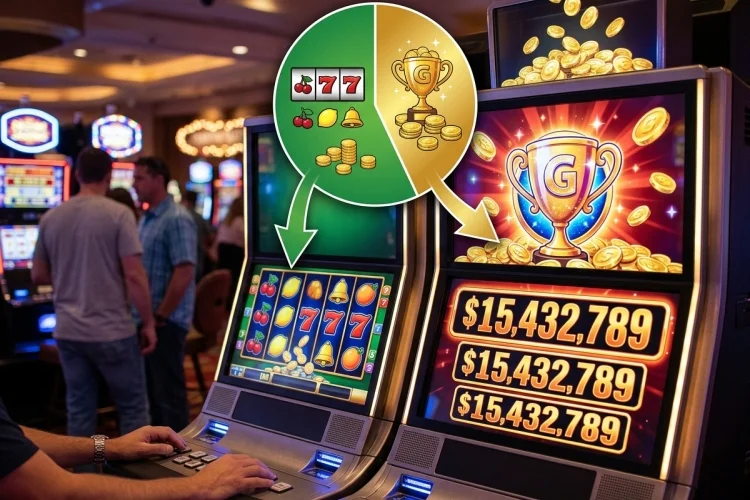

A jackpot can grow much faster when it is connected to more than one game. Instead of relying on wagers from a single slot, a shared system may collect qualifying contributions from games across several casino floors, websites, or participating venues.
This setup is commonly called a Network Progressive Jackpot. In technical standards, it may also be described as a linked or multi-site jackpot, depending on how widely the participating games are distributed.
The larger network can help the advertised prize rise quickly, but it does not guarantee that an individual player has better odds. Understanding how the pool, trigger, eligibility rules, and central controller work is essential before placing a wager.
How a Network Jackpot Is Defined
A progressive jackpot is a prize that increases from a starting value as qualifying gameplay contributes to it. A network version connects several participating games to one common prize.
Gaming Laboratories International distinguishes between three arrangements: standalone jackpots, linked jackpots, and multi-site jackpots. A multi-site system connects a linked prize across multiple gaming venues and may also include interactive gaming systems where permitted.
The term “network jackpot” is therefore a practical description rather than one universal regulatory category.
How the Prize Pool Grows
The jackpot begins with a seed or reset amount. As eligible wagers are placed, a predefined contribution is added to the prize pool.
Suppose a network collects 0.5% of qualifying turnover. If participating games process $2 million in eligible wagers, the pool would receive:
$2,000,000 × 0.5% = $10,000
This calculation is only an example. The actual increment method must be explained in the official rules. UK technical standards require disclosure of the funding method, starting seed, and any jackpot ceiling.
What the Central Controller Does
A network system needs technology to collect contributions, calculate the current prize, and communicate that value to every participating game.
Under GLI’s multi-site model, local controllers gather contributions from connected gaming equipment and send them to a central controller. The central controller increases the jackpot and distributes the updated amount back to participating locations and displays.
This process keeps the shared prize synchronised across the network.
How the Jackpot Is Triggered
A jackpot may be awarded through a specific symbol combination, a bonus game, or a mystery trigger selected by an approved random system.
The winning method should be described in the paytable or jackpot information page. Regulated game rules should explain what constitutes a win, whether wagers contribute to a progressive prize, and how that prize operates.
A growing meter does not show that the award is about to be triggered. The amount and the winning probability are separate parts of the game.
Does Every Wager Qualify?
Not necessarily. Some network jackpots require a minimum bet, an optional side wager, a particular number of active lines, or participation in a specific game mode.
The jackpot rules should clearly identify ineligible players and state the relevant theoretical RTP when the progressive prize cannot be won.
Always check the full cost of qualification. A higher stake may provide access to the jackpot, but it also makes the balance decline faster.
What Happens After a Win?
After a qualifying player wins, the jackpot normally returns to its published reset value. New eligible contributions then begin increasing the prize again.
The central system communicates the win and reset across participating locations. Technical standards also cover situations where network timing makes two triggers appear simultaneous, ensuring that the award process follows published rules.
A recently reset jackpot can theoretically be triggered again at any time.
RTP and Volatility
The game may show one combined RTP covering the base slot and progressive component, or separate percentages for each.
Network jackpots are generally rare and potentially very large, which makes them highly volatile. The UK Gambling Commission recommends monitoring the base game separately because occasional jackpot wins can heavily distort performance data.
RTP remains a long-term theoretical measurement rather than a promise for one session.
A Network Progressive Jackpot connects multiple eligible games to one growing prize. Contributions are gathered by local systems, combined through a central controller, and displayed across the participating network.
The prize continues increasing until the published winning event occurs, after which it normally resets to a seed value. Before playing, check the qualifying stake, trigger method, jackpot contribution, RTP, and current prize rules.
Do not assume that a larger network or growing meter makes a win more likely. Use only an affordable entertainment budget, monitor the total amount wagered, and stop when your predetermined money or time limit is reached.