
Skip to content

Recent Posts

  • Hacksaw Gaming Slots: Bonus Mechanics and Design Explained
  • Payline Slots vs Megaways Slots: Which Mechanics Change the Game?
  • Android Slots Guide: Should You Use an App or Mobile Browser?
  • How to Compare Volatility Using Free Play Without Guessing
  • Does a Progressive Jackpot Reduce Base Game RTP? The Real Math

Most Used Categories

  • Free Slots (6)
  • Megaways Slots (5)
  • Slot Themes (4)
  • Mobile Slots (4)
  • Slot Providers (3)
  • Slot Features (3)
  • Jackpot Slots (3)
  • Slot Guides (3)
  • Slot Reviews (3)
  • High-RTP Slots (2)
Skip to content
Synergie Solutions Web

Synergie Solutions Web

Subscribe
  • Jackpot Slots
  • Megaways Slots
  • Mobile Slots
  • Slot Features
  • Slot Providers
  • Slot Guides

Home › Slot Providers

Category: Slot Providers

Hacksaw Gaming Slots: Bonus Mechanics and Design Explained

Hacksaw Gaming Slots: Bonus Mechanics and Design Explained

Elena Morales09/19/202609/19/2026

Hacksaw Gaming games are often easy to recognize before you even read the provider name.

The studio favors bold artwork, unusual characters, compact mobile-friendly screens, multiplier-heavy features, and bonus rounds that can significantly change the rules of the base game.

But Hacksaw Gaming Slots are more varied than their reputation for volatile bonuses suggests. The portfolio ranges from conventional paylines to Stackways, instant-win titles, scratchcards, and games with several different feature modes.

Understanding Bonus Buy, FeatureSpins, sticky mechanics, reel multipliers, and bonus persistence makes the catalogue much easier to navigate.

Mobile-First Thinking Came Before the Famous Slots

Hacksaw’s design story begins with mobile content.

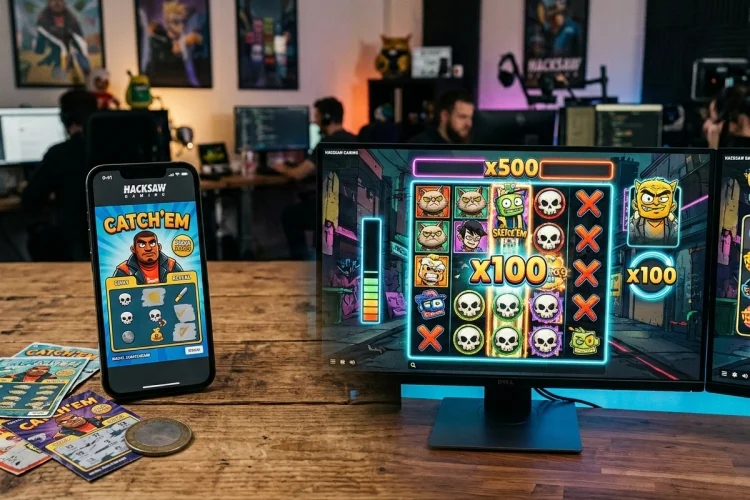
The company was already emphasizing mobile-first scratchcards in 2019, saying its games were being designed around mobile interaction while digitally modernizing the traditional scratchcard experience.

Its first slot, Stick’Em, arrived in September of that year.

That 5×4 game used sticky win spins, Free Spins, and a bonus wheel, giving the young slot catalogue a more feature-driven direction almost immediately.

Today, Hacksaw says its slots are designed around vertical screens and work across smartphones, tablets, and desktop computers.

This explains part of the studio’s visual character.

Important feature information is usually concentrated around the central grid rather than spread through a complicated desktop-only interface.

That design remains fairly consistant even when the mechanics themselves become sophisticated.

Bonus Buy Is Only One Way Into the Features

Bonus Buy has become closely associated with modern Hacksaw releases, but it is only one entry route.

A feature can still be activated naturally through Scatters or game-specific symbols.

Wanted Dead or a Wild, for example, contains three distinct bonus games and also provides Bonus Buy access where permitted.

Chaos Crew takes the same general idea.

Its bonus game collects multiplier values and eventually converts the accumulated value into the final result. Players can reach the feature through normal gameplay or use the direct-buy option when available.

The critical point is that feature purchase does not mean feature profit.

Buying access simply changes the route into the bonus.

The outcome still depends on the game’s mathematical rules.

FeatureSpins Modify the Base Game Instead

FeatureSpins work differently from a conventional Bonus Buy.

Rather than jumping straight into Free Spins, they alter certain conditions during paid spins in exchange for an increased wager.

Rip City illustrates the system clearly.

Its BonusHunt FeatureSpins increase the chance of triggering a bonus round, while Wild Cat FeatureSpins guarantee two or three Wild Cat symbols depending on the selected price.

Chaos Crew 2 expands the concept further.

Its BonusHunt mode makes a bonus significantly more likely to trigger for a higher wager, while other FeatureSpins can interact with specific mechanics such as Epic Drop.

Think of this as an intermediate option:

Normal spins leave the original conditions untouched.

FeatureSpins modify the base-game setup.

Bonus Buy enters a specified bonus immediately.

That distinction is easy to miss when all three appear in the same feature menu.

Sticky Wilds Create Persistent Bonus Value

Persistence is another recurring theme.

A normal Wild appears, contributes to a result, and then disappears when the spin ends.

Sticky Wilds remain active for additional spins under specified feature conditions.

Wanted Dead or a Wild uses this prominently in its Great Train Robbery Bonus Game. Wild symbols landing during the feature remain sticky and can take part in repeated winning combinations.

Rip City uses persistence differently.

During its Maxx Bonus, reels become activated when Wild Cats appear. Once activated, those reels can continue producing Wild Cats throughout the remaining Free Spins.

This gives many Hacksaw bonuses a progression element.

The early part of the feature can change what becomes possible later.

Instead of every Free Spin being completely identical in structure, the game may accumulate Wilds, unlock reels, or build multipliers.

That is a major reason reading the full bonus rules is useful.

Multipliers Can Belong to Symbols, Reels or Collections

There is no single “Hacksaw multiplier system.”

Chaos Crew attaches multiplier behavior to its character symbols and later stores multiplier bonuses above the reels during its bonus round.

Wanted Dead or a Wild can place multiplier values on expanded DuelReels. If several Wild reels participate in the same winning combination, their values are combined according to the specified mechanics before affecting the result.

Chaos Crew 3 introduces Reel Multipliers alongside Crazy Multipliers, Glitch Dogs, and Chaos Upgrade symbols. During certain bonuses, new multiplier symbols can increase the Reel Multiplier while also refreshing the feature’s remaining lives.

These examples demonstrate why the word “multiplier” by itself is not enough information.

Always ask where the multiplier sits, what activates it, whether it persists, and when it resets.

Those four details can completely change how the feature works.

Refilling Lives Replace Traditional Free-Spin Counters in Some Games

Not every Hacksaw bonus uses a fixed number of Free Spins.

The Chaos Crew series is a useful example of an alternative structure.

Chaos Crew’s original bonus involves multiplier collection, while Chaos Crew 3 includes features with three refilling lives. Certain qualifying symbols both improve the Reel Multiplier and restore the available lives.

Keep’em uses another version of the idea.

Its KEEP’EM feature awards three respins, while qualifying symbols can remain locked and a Heart symbol can refill the counter. Additional bonus rounds then add Free Spins, sticky cash prizes, and collection mechanics.

This style makes the bonus duration variable.

A feature might end quickly if nothing useful lands, or continue longer when qualifying symbols repeatedly refresh the counter.

Again, longer does not necessarily mean more profitable.

The value still depends on what actually lands during those additional rounds.

Proprietary Mechanics Give Games Distinct Identities

Hacksaw increasingly uses named mechanics to differentiate individual game families.

DuelReels first appeared in Wanted Dead or a Wild.

Stackways provides another example.

Ronin Stackways uses special symbols that can fill an entire reel with multiple copies of an identical symbol. The game can reach up to 100,000 winning ways while offering normal and enhanced Stackways variants.

This demonstrates how far the portfolio has moved from traditional five-reel paylines.

Some games still use a relatively simple 15- or 19-payline structure, while others transform reels, add ways, use collection grids, or create instant-win formats.

The studio’s identity therefore comes from its presentation and feature engineering more than from one universal reel system.

That diversity is worth remembering when comparing different titles from the same provider.

High Volatility Is Common, but Not Universal

Wanted Dead or a Wild carries a 4/5 volatility rating and a maximum win of 12,500x. Chaos Crew is rated 5/5 with a maximum of 10,000x, while Chaos Crew 2 is also rated 5/5 and raises the stated maximum to 20,000x.

That helps explain the provider’s reputation for dramatic payout swings.

But not all titles fit the stereotype.

Rip City is rated 3/5, while Ronin Stackways is rated 2/5.

So it would be inaccurate to say every Hacksaw release is ultra-high volatility.

The sensible approach is to check each game’s individual specification.

Volatility, maximum win, RTP, payline structure, and feature costs are seperate variables.

A familiar cartoon art style does not guarantee familiar mathematics.

Multiple RTP Configurations Are Worth Checking

Another detail visible across Hacksaw’s official game pages is the presence of several RTP configurations.

Wanted Dead or a Wild lists versions including 96.38%, 94.55%, 92.33%, and 88.42%. Rip City similarly lists several possible configurations.

This means an article saying “this game’s RTP is X” may not describe every version available through every operator.

Check the information panel of the actual game instance.

The same principle applies to Bonus Buy and FeatureSpins.

Market conditions can determine whether certain features appear at all.

Understanding the exact version in front of you is more useful than relying on a generic review written for another operator or jurisdiction.

The Scratchcard Heritage Still Matters

Hacksaw’s modern portfolio may contain advanced slot mechanics, but the original scratchcard influence has not completely disappeared.

The company continues to maintain a dedicated scratchcard catalogue alongside slots and instant-win products.

More importantly, the early focus on mobile simplicity can still be seen in the way games communicate features.

Symbols tend to be visually distinctive, bonus transitions are dramatic, and interactive information is designed to fit relatively compact screens.

The result is a style that can feel direct even when the underlying mathematics are not simple.

That balance – simple presentation covering potentially complicated bonus logic – is arguably one of the more distinctive characteristics of the portfolio.

It is also why opening the paytable remains worthwhile.

The interface may look simple while several multiplier and persistence rules operate underneath.

Hacksaw Gaming Slots combine mobile-first presentation with a wide range of mechanics, from Bonus Buy and FeatureSpins to sticky Wilds, Reel Multipliers, Stackways, and refilling bonus counters.

Their scratchcard heritage helps explain the direct visual style, but the modern catalogue is much broader. Before trying a title, review its actual RTP version, volatility, feature rules, and demo information.

NetEnt Slots: From Classic Hits to Modern Features

NetEnt Slots: From Classic Hits to Modern Features

Elena Morales08/17/202608/05/2026

NetEnt has produced some of the most recognizable games in online casino history. Its catalogue includes simple five-reel slots, branded adventures, cluster games, jackpots, and modern sequels with much larger feature sets.

That variety makes NetEnt Slots interesting to explore. Older releases often focus on one memorable idea, while newer titles combine expanding grids, Avalanche wins, feature choices, and higher maximum payouts.

NetEnt is now part of Evolution’s broader portfolio of gaming brands, but it continues to maintain a distinct identity built around characters such as Gonzo and games such as Starburst and Divine Fortune.

Starburst Shows the Power of Simplicity

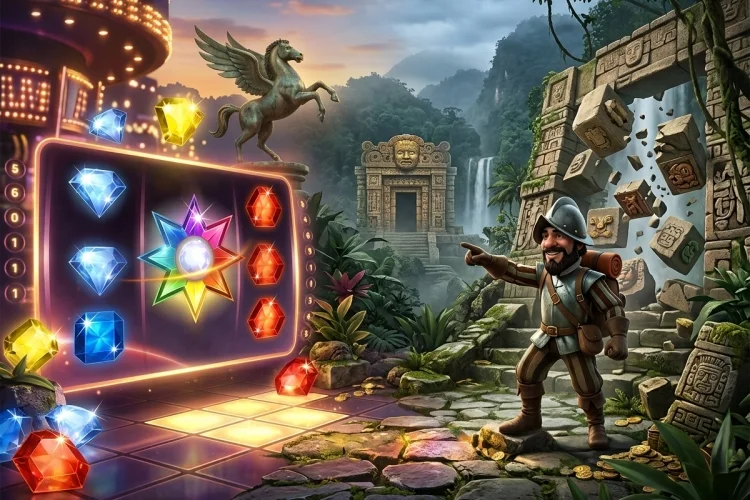
Released in 2012, Starburst uses five reels, three rows, and ten paylines. Its central feature is an expanding wild that can cover an entire reel and trigger a respin.

The official game page lists a 96.08% RTP and an 800x maximum payout. Those numbers are modest compared with many newer feature-heavy games, but the straightforward layout makes the rules easy to understand.

Starburst demonstrates that a slot does not need several bonus rounds to become memorable. Clear symbols, bright visuals, and one easily recognized mechanic can be enough.

Gonzo’s Quest Introduced Avalanche Wins

Gonzo’s Quest takes a different approach. Instead of traditional spinning reels, its Avalanche feature removes winning symbols and drops new ones into the empty spaces.

Consecutive Avalanche wins can increase the multiplier, while the Free Falls feature raises the multiplier further. The original title was released in 2010 and currently lists a 95.97% RTP with a maximum payout of 2,200x the stake.

This mechanic gives each round a stronger sense of progression because one initial result can create several connected outcomes.

NetEnt Also Built More Complex Classics

Not every older NetEnt game is simple. Divine Fortune combines a 5×3 layout and 20 paylines with Wild Respins, Free Spins, a Wild on Wild feature, and three jackpot prizes.

Its official page lists a 96.59% RTP, medium volatility, and a maximum payout of 1,000x excluding the wider effect of its jackpot structure.

Jumanji goes even further. It uses an unusual 3-4-5-4-3 reel layout, four random modifiers, a board-game bonus, and several Free Spins variations.

Cluster Pays Expanded the Format

Aloha! Cluster Pays was the first NetEnt release to use the studio’s cluster-pays system. Instead of following fixed lines, matching symbols create wins by connecting in groups.

This approach opened the door to larger grids and mechanics based on growing symbol groups. It also showed that NetEnt was willing to move beyond the familiar left-to-right payline structure.

Cluster games generally feel busier because symbols can connect across several parts of the screen rather than along a small set of lines.

Modern Sequels Add Larger Feature Sets

Recent sequels frequently preserve a famous theme while rebuilding the gameplay. Starburst Galaxy uses Avalanche wins, can expand from a 5×5 grid to 7×7, and includes several Elevate options. Its listed maximum payout is 17,288x.

Gonzo’s Quest II: Return to El Dorado uses a six-reel grid that can expand from four to eight rows. It also offers colossal symbols, free spins, Avalanche mechanics, and up to 262,144 ways to win.

These games are more complex than their predecessors, so reading the help section becomes especially important.

RTP and Volatility Differ by Title

There is no universal mathematical profile across the catalogue. Blood Suckers is listed with a 98% RTP, Starburst shows 96.08%, and Gonzo’s Quest displays 95.97%.

RTP represents the designed long-term return, while volatility describes how widely and frequently prizes may be distributed. A highly volatile title may place more of its potential in larger but rarer results.

Neither figure predicts the outcome of a short session.

NetEnt Slots cover several generations of game design. Starburst proves that a simple feature can create a lasting classic, while Gonzo’s Quest popularized connected Avalanche wins.

Divine Fortune, Jumanji, and Aloha! Cluster Pays introduced jackpots, board-game bonuses, modifiers, and alternative win systems.

Newer releases build on those ideas with expanding grids, feature choices, and larger maximum payouts. Before selecting a title, check its exact RTP, volatility, win system, and bonus rules.

Open a free demo where available, compare an original game with its modern sequel, and choose the format that feels clearest and most entertaining.

What Makes a Slot Provider Trustworthy? 7 Signs to Check

What Makes a Slot Provider Trustworthy? 7 Signs to Check

Elena Morales08/12/202608/05/2026

A polished slot game can look reliable within seconds. The animation runs smoothly, the soundtrack sounds professional, and the bonus symbols promise impressive rewards.

However, attractive presentation alone does not prove that the developer follows recognized technical or regulatory standards. Determining whether a Slot Provider Trustworthy reputation is deserved requires a little research.

Useful signals include valid licensing, independent game testing, transparent mathematical information, secure software practices, and clear rules.

You should judge the company across several releases rather than relying on one popular title. Here are seven practical signs that separate a credible software studio from an unknown supplier with little verifiable information.

1. It Holds Relevant Gaming Licences

A trustworthy supplier should be authorized to provide gambling software in the regulated markets it serves. Some regulators issue specific business-to-business licences for companies supplying the essential components of gambling games.

The Malta Gaming Authority, for example, describes its Critical Gaming Supply licence as a B2B authorization covering the supply and management of material game elements.

A licence is jurisdiction-specific. Approval in one country does not automatically mean the provider can legally supply games everywhere.

2. Its Games Receive Independent Testing

Random slot outcomes cannot be evaluated reliably by making a few hundred demo spins. Independent laboratories use technical and statistical methods to examine RNG systems and game mathematics.

Gaming Laboratories International explains that RNG testing checks whether outcomes are unpredictable and free from inappropriate bias. eCOGRA similarly describes RNG certification as a process for validating the fairness and integrity of online gaming systems.

Look for the name of the test laboratory and the jurisdictions covered by its approval.

3. RTP and Game Rules Are Easy to Find

Players should be able to find the return-to-player percentage, paytable, winning system, bonus conditions, stake range, and maximum win without searching through confusing menus.

British remote-gambling standards require game rules and relevant information about the likelihood of winning to be available so customers can make informed decisions.

A credible provider also explains that RTP is theoretical and calculated over long-term play. It should not present the percentage as a guaranteed personal return.

4. Random Outcomes Follow Clear Standards

A reliable game should not secretly adjust its probabilities because someone has recently won or lost. Each outcome must follow the approved mathematical rules.

The UK Gambling Commission’s RTS 7 aims to ensure that virtual games operate fairly and requires random results to meet defined standards.

This does not mean every session will feel balanced. Random variation can still produce long losing periods or several wins close together.

5. Demo Games Represent Paid Versions Accurately

Free demos should not create an unrealistically generous impression. When a demo and real-money version are offered together under British regulation, they must use the same game rules and accurately represent prize likelihood and distribution.

The regulator also recommends using the same RNG or another system that produces no systematic bias.

This matters because demo mode is often a player’s first introduction to a title. A trustworthy provider should not rely on misleading practice results.

6. It Takes Security and Software Control Seriously

Reliable suppliers maintain structured testing, release, and change-management processes. Updates should be documented and tested before entering a live environment.

British compliance guidance states that game and critical-system changes should have documented plans, adequate testing, authorization, and controlled software migration.

Applicable remote licensees must also undergo independent annual security audits based on relevant ISO/IEC 27001 requirements.

Public security details may be limited, but professional certification and regulated partnerships are positive signals.

7. Responsible Design Is Part of the Product

Trustworthy development is not only about RNG fairness. The game should also communicate stakes, returns, and results honestly.

British responsible-product rules prohibit celebrating a return that is equal to or lower than the total stake as though it were a genuine win.

Look for readable controls, accessible rules, sensible pacing, and clear financial information. These details show whether the company considers the player experience beyond flashy graphics.

A Slot Provider Trustworthy enough for consideration should offer more than famous games and attractive marketing.

Check its licensing status, independent RNG testing, RTP disclosure, game rules, software controls, demo accuracy, and responsible-design standards.

No single badge proves everything, so combine several signals and verify them through regulator registers or recognized testing laboratories.

Review multiple games rather than one release, and pay attention to information that is missing as well as what is displayed. Before playing any title, open its help screen and confirm the provider, RTP, rules, and legal availability in your location.

Recommended

  • Wild Symbol Weighting: Why More Wilds Do Not Always Mean More WinsWild Symbol Weighting: Why More Wilds Do Not Always Mean More Wins
  • Can Free Spins Be Retriggered? How Extra Spins WorkCan Free Spins Be Retriggered? How Extra Spins Work
  • What Is a Free Spins Bonus Round? A Simple Slot GuideWhat Is a Free Spins Bonus Round? A Simple Slot Guide
  • Does a Higher RTP Mean You Will Win More? The Real AnswerDoes a Higher RTP Mean You Will Win More? The Real Answer
Build stronger financial knowledge with practical insights into personal finance, investing, saving, budgeting, markets, business, and long term planning. Our financial content explains important concepts clearly while exploring strategies, trends, and economic developments that can help readers make more informed decisions, manage money responsibly, and understand changing financial opportunities responsibly.
Click Here
Visit Our Site
Learn More
Read More
Find Out More
Discover More
Explore More
See More
View More
Get Started
Start Here
Visit Now
Click to Learn More
Explore Now
Discover Now
Check It Out
Take a Look
View Details
See Details
Learn More Here
Find Out Here
Discover It Here
Explore Our Site
Visit the Website
Go to Website
Visit This Page
Open Website
Browse Our Site
Browse Now
Explore the Website
Find More Information
Get More Information
Read the Full Story
Read Full Details
View Full Details
See Full Information
Discover the Details
Explore the Details
Learn the Details
Check the Details
Continue Reading
Keep Reading
Read Further
Explore Further
Discover Further
Learn More Today
Explore Today
Discover Today
Visit Today
Check It Out Now
See What’s Inside
Discover What’s Inside
Explore What’s Inside
See What We Offer
Discover What We Offer
Explore Our Options
View Our Options
See Your Options
Explore Your Options
Discover Your Options

What’s New

  • Hacksaw Gaming Slots: Bonus Mechanics and Design ExplainedHacksaw Gaming Slots: Bonus Mechanics and Design Explained
  • Payline Slots vs Megaways Slots: Which Mechanics Change the Game?Payline Slots vs Megaways Slots: Which Mechanics Change the Game?
  • Android Slots Guide: Should You Use an App or Mobile Browser?Android Slots Guide: Should You Use an App or Mobile Browser?
  • How to Compare Volatility Using Free Play Without GuessingHow to Compare Volatility Using Free Play Without Guessing
  • About Us
  • Contact
  • Disclaimer
  • Privacy Policy
  • Terms & Conditions
  • Sitemap
© 2026 Synergie Solutions | Theme: BlockWP by Candid Themes.